
A Century of Change: Mill Wharf to Land Yacht
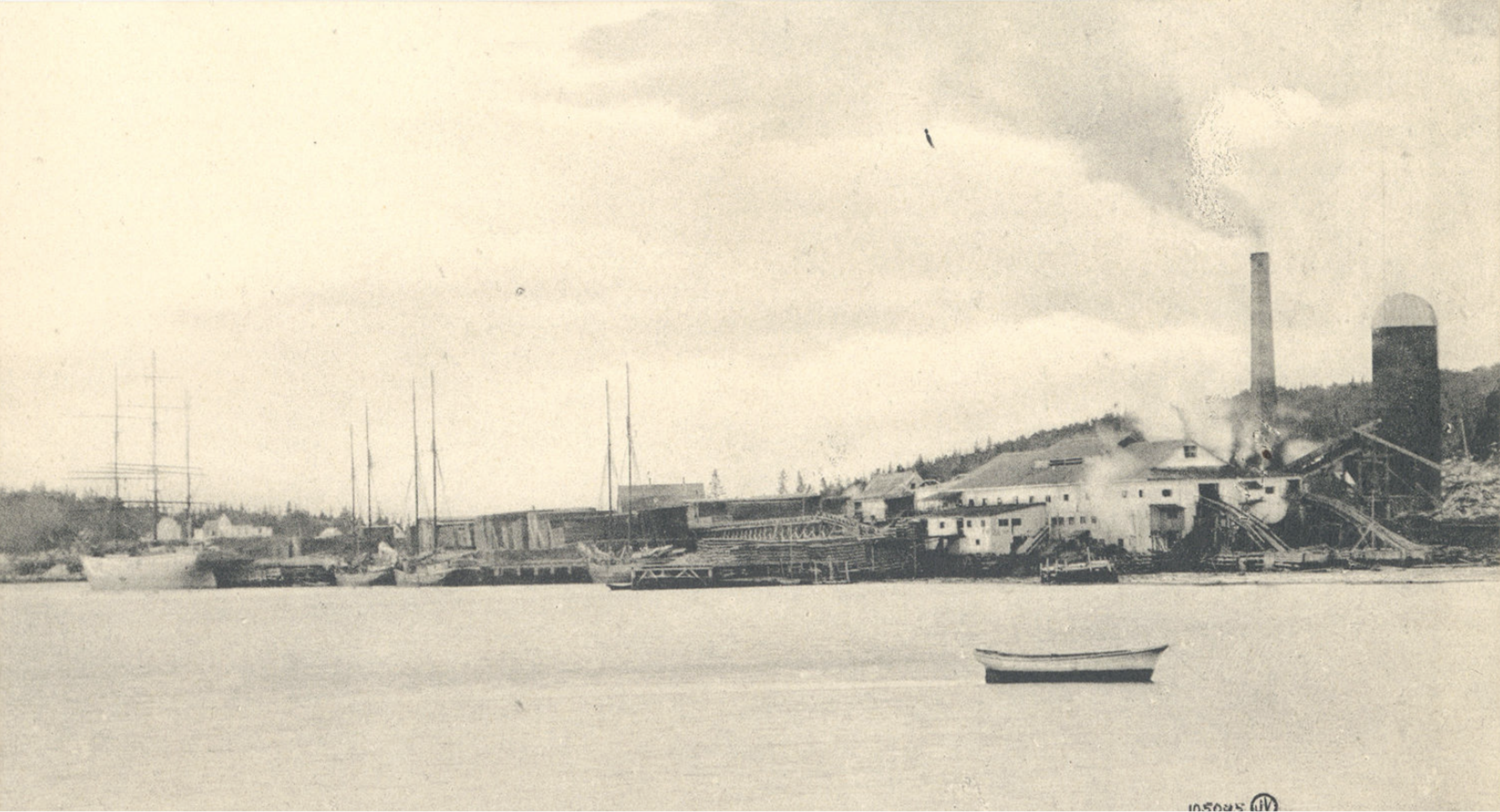
For centuries, St. Margaret’s Bay was a working forest harbour. Trees from the hinterland came down the Ingram River and the woods roads. At the water they became boards. Boards left by schooner and by rail. The shoreline under and around the Land Yacht was part of that industry.
The community takes its name from Charles Ingram, a sergeant of the Warburton Regiment who settled near the river after 1749. The place was officially named Ingramport in 1905 — port because this was a shipping place, not only a village.
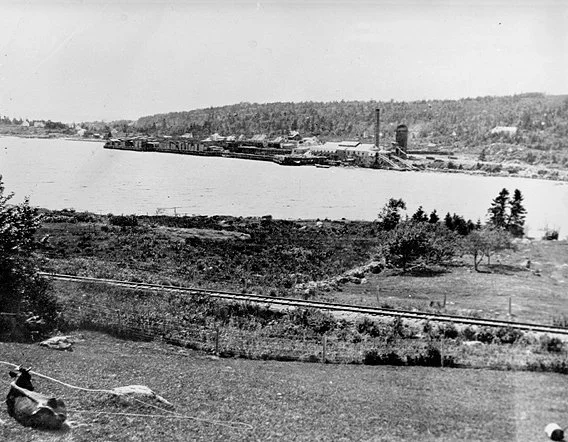
Lewis Miller Lumber Co., Ingramport, seen from Boutilier’s Point. Photograph taken after the railway (1904/1906) and before the 1928 fire. The Land Yacht is built on the very foundations of the tall smokestack.
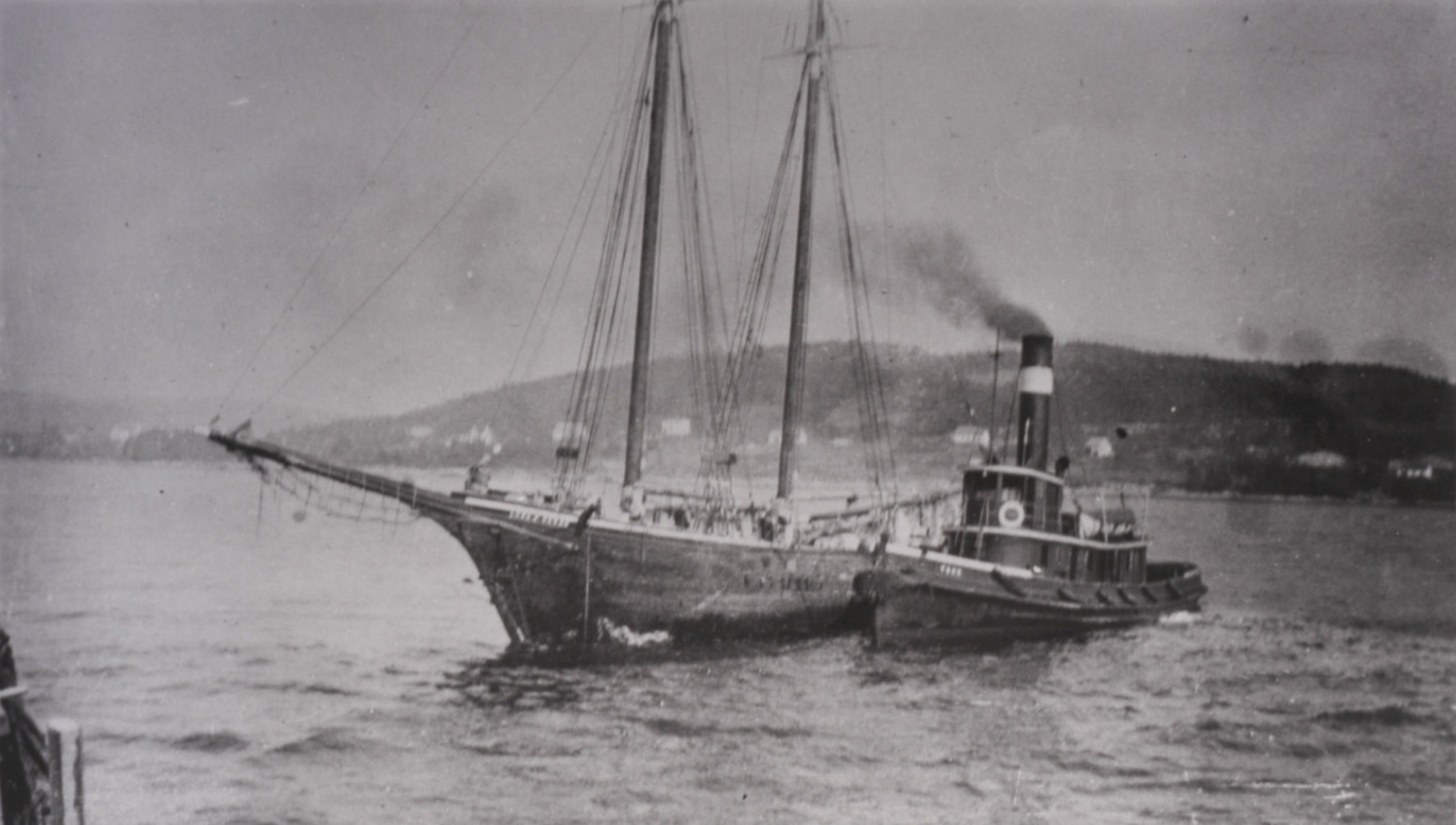
A massive fire in 1928 ended the mill. The forests that fed it had also been heavily cut. When the whistle stopped, many workers left. Ingramport became quieter — cottages and year-round houses where mill yards and piling grounds had been.
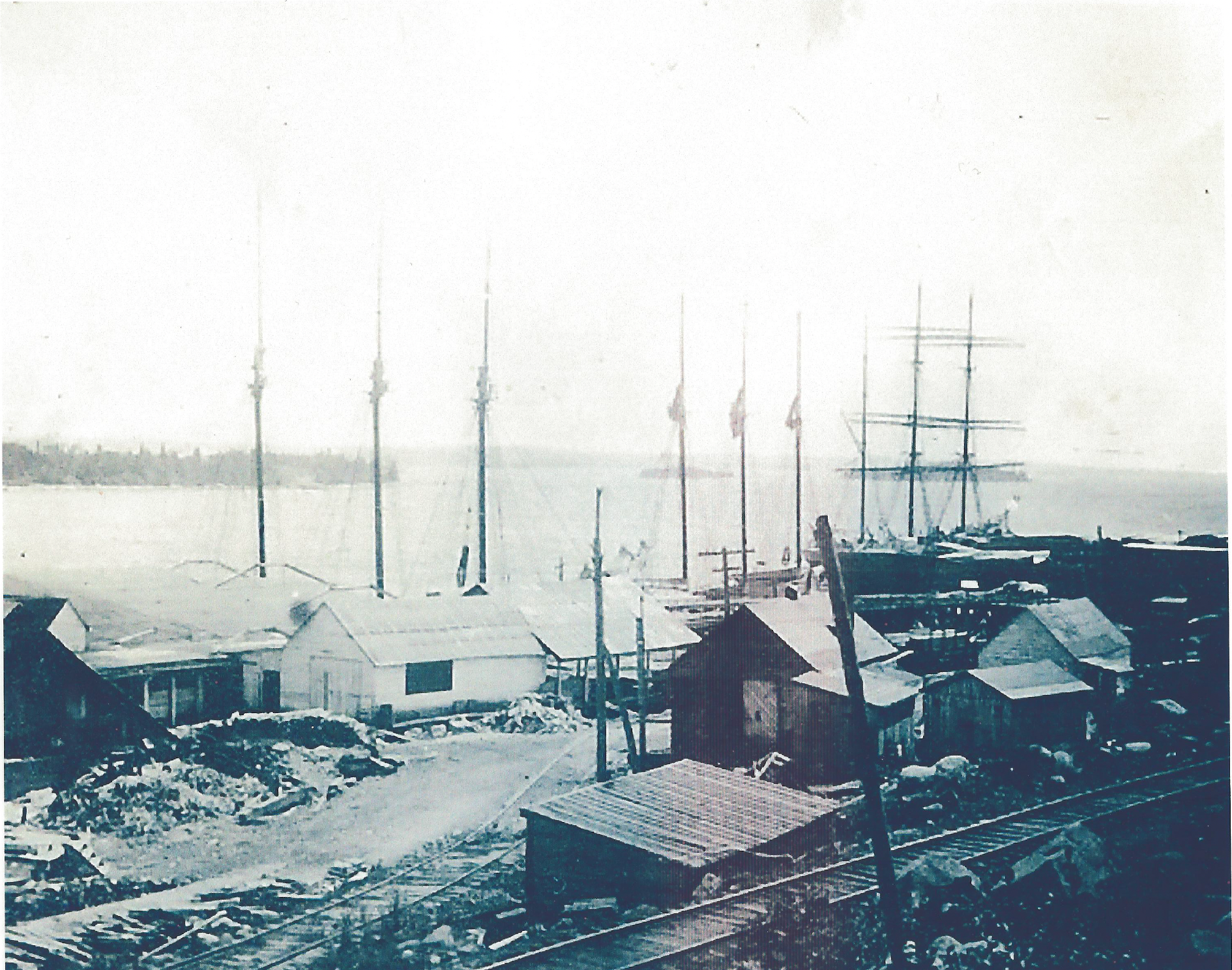
Lewis H. Miller (1848–1909) was a Scottish lumber merchant who had already run mills in Sweden and a short, difficult venture in Newfoundland (Millertown and Lewisporte). He then took timber and a mill site at Ingram Docks — Ingramport — on St. Margaret’s Bay. Miller himself died in 1909. His sons carried on as the Lewis Miller Lumber Company.
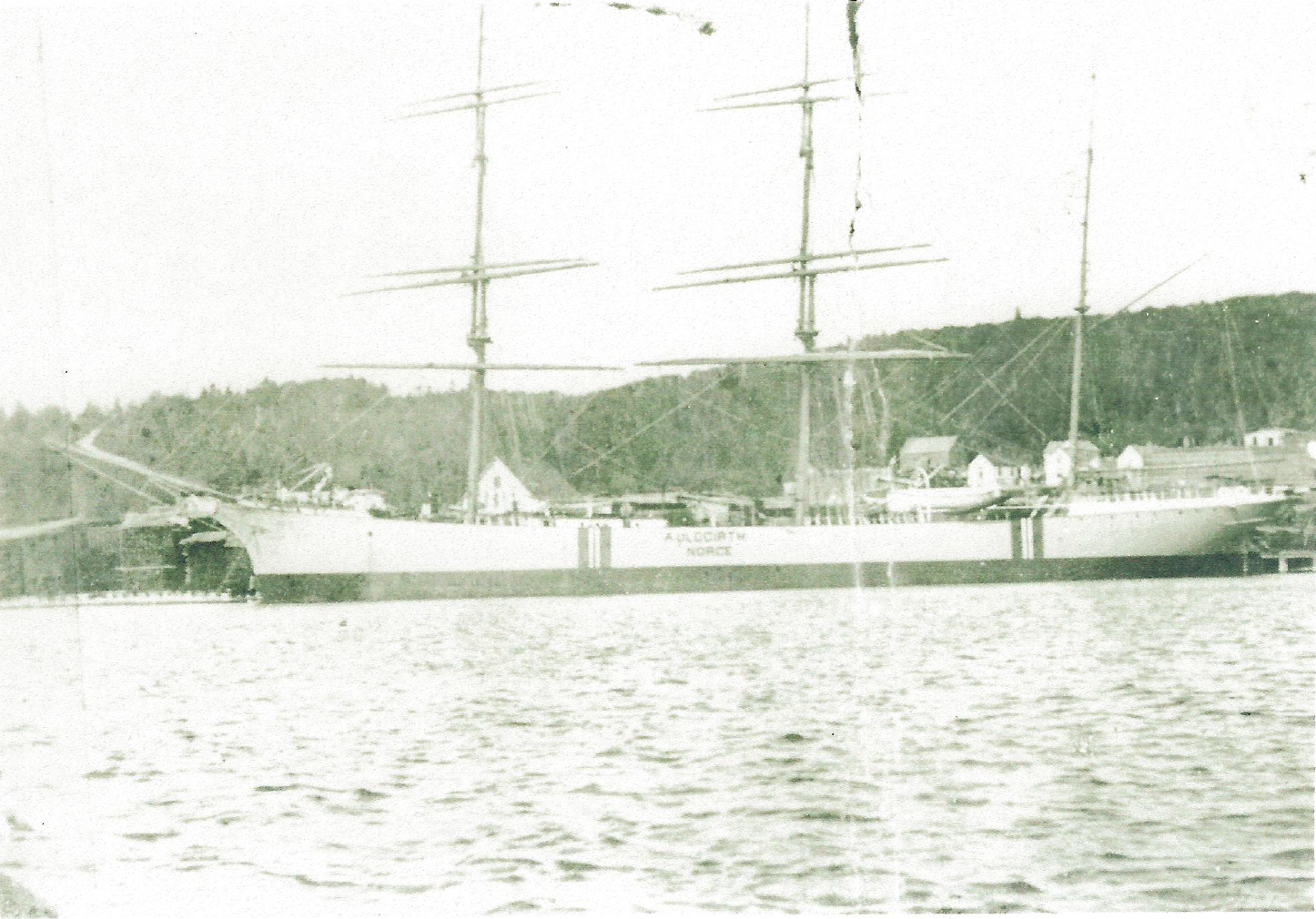
Ships came from abroad. The company brought Swedish workers to Ingramport. Local memory is that this was one of the biggest lumber exporters on the Bay, sending product to the West Indies and the United States.
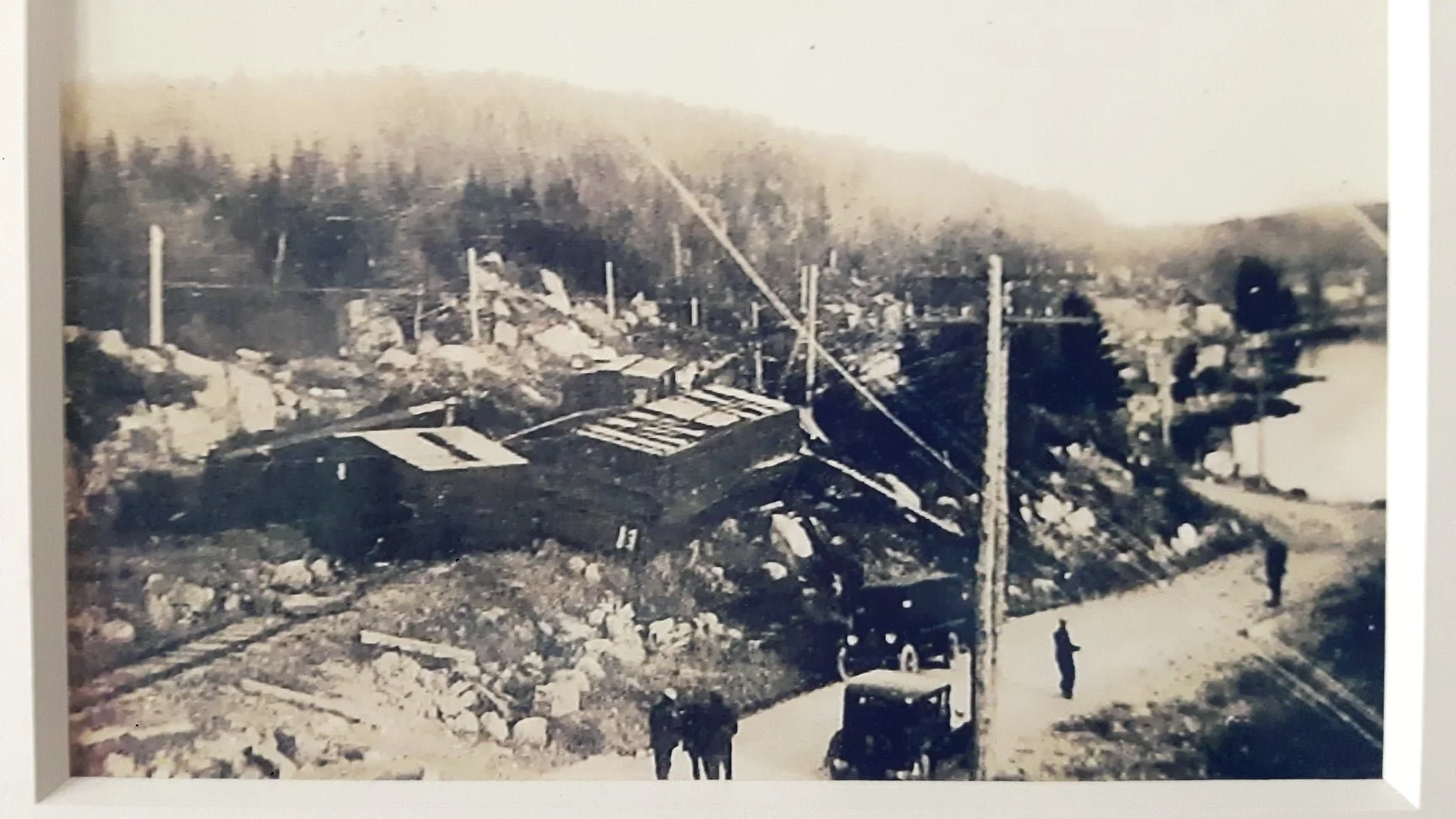
Undated photo of a train derailment on the Land Yacht grounds. Rumour has it the boxcars were filled with rum!
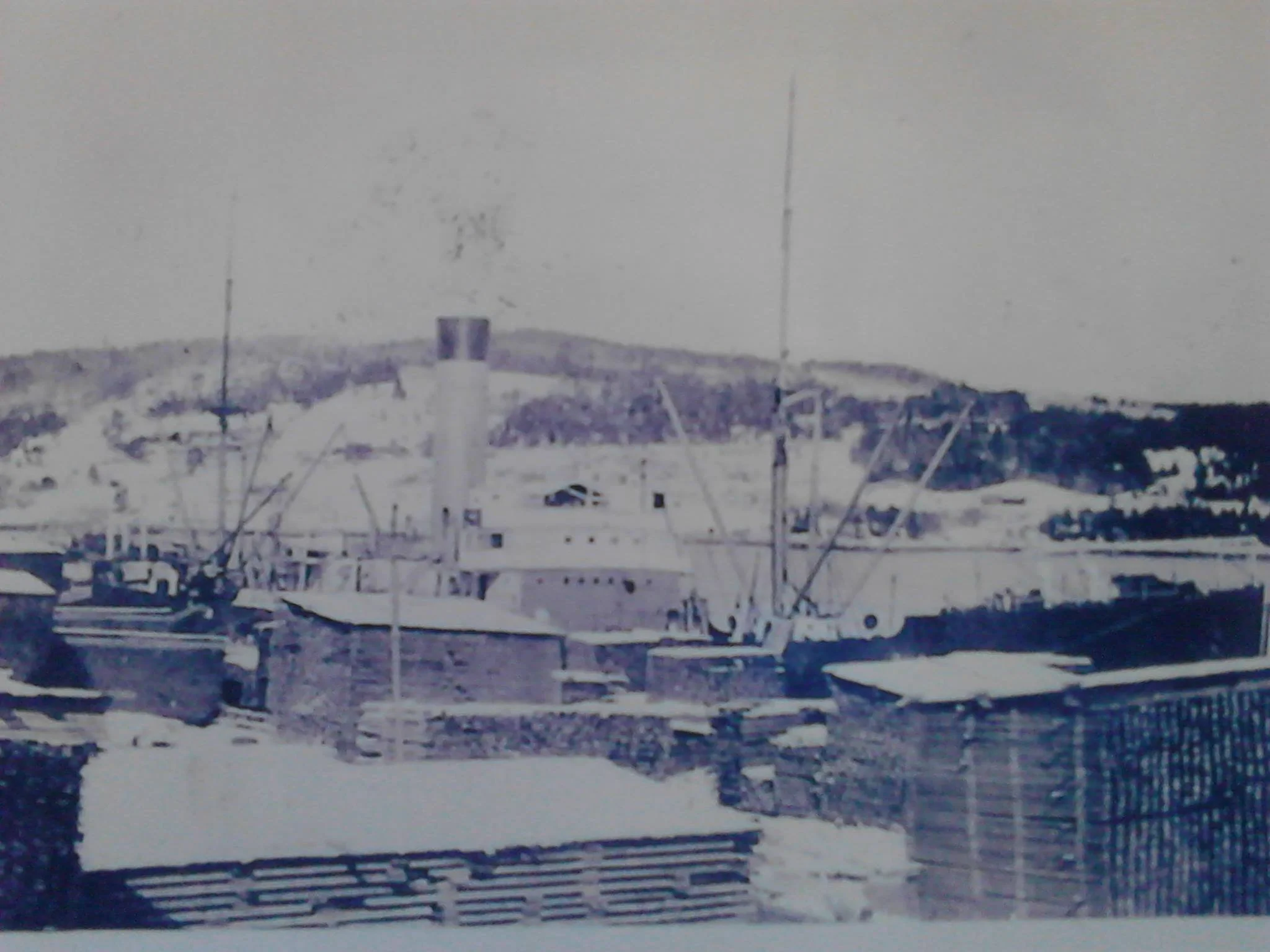
The Land Yacht’s water lot is a pre‑Confederation grant — older than Confederation itself. Reef Balls are being placed across our three‑acre seabed to create shelter and habitat for lobster, fish, oyster and eel grass - in the very waters where schooners once loaded lumber. To learn more about the Land Yacht Living Reef, click here.